

Skincare Basics: Why Hydration Is Key to Healthy, Radiant Skin
Healthy-looking skin begins with hydration.
While cleansers, serums, and moisturizers all play important roles in a skincare routine, maintaining balanced moisture levels is one of the simplest ways to support a smoother, softer, and more radiant complexion.
Whether your skin is dry, oily, combination, or sensitive, hydration matters. Understanding how your skin retains water and how ingredients like hyaluronic acid work can help you build a skincare routine that supports your skin’s natural needs.

Why Is Skin Hydration So Important?
Your skin is constantly exposed to environmental factors, including changing temperatures, dry air, and everyday cleansing. These conditions can contribute to moisture loss, leaving skin feeling tight, rough, or uncomfortable.
When skin is adequately hydrated, it tends to appear smoother, more supple, and refreshed. Hydration also supports the skin’s protective barrier, which helps limit water loss and maintain a balanced complexion.
Common signs of dehydrated skin include:
-
Tightness or discomfort, particularly after cleansing
-
Dullness or a lack of radiance
-
Fine lines that appear more noticeable
-
Rough or uneven texture
-
Skin that feels less supple than usual
One important distinction is that dry skin and dehydrated skin are not the same thing.
Dry skin generally produces less natural oil, while dehydrated skin lacks sufficient water. This means even oily skin can experience dehydration.
Understanding the difference allows you to choose skincare products that address your skin’s needs rather than relying on a one-size-fits-all routine.
What Is Hyaluronic Acid, and Why Does Your Skin Need It?
Hyaluronic acid is a naturally occurring substance found throughout the body, including the skin. It’s known for its ability to attract and hold water, making it a widely used ingredient in hydrating skincare products.
In skincare formulations, hyaluronic acid functions as a humectant, meaning it helps attract and retain moisture.
When applied topically, hyaluronic acid can help:
- Improve the feeling of skin hydration
- Create a smoother, more supple appearance
- Temporarily soften the appearance of fine lines associated with dehydration
- Support a comfortable, refreshed complexion
- Complement a daily moisturizing routine
Unlike exfoliating acids, hyaluronic acid isn’t primarily used to remove dead skin cells. Its main purpose is hydration, making it a useful ingredient in many skincare routines.
Hydration vs. Moisturization: What’s the Difference?
Although the terms are often used interchangeably, hydration and moisturization serve different purposes.
Hydration focuses on increasing the skin’s water content. Humectant ingredients, including hyaluronic acid and glycerin, help attract and retain water.
Moisturization focuses on softening the skin and helping reduce moisture loss. Moisturizers often contain a combination of humectants, emollients, and occlusive ingredients that work together to maintain comfort and support the skin barrier.
For many skin types, combining a hydrating serum with a suitable moisturizer provides a more complete approach than relying on either product alone.
How to Add Hyaluronic Acid to Your Skincare Routine
Incorporating hyaluronic acid into your daily routine doesn’t need to be complicated.
Step 1: Start with a gentle cleanser.
Remove makeup, sunscreen, and daily buildup without leaving your skin feeling unnecessarily stripped.
Step 2: Apply a hydrating serum.
After cleansing, apply a hyaluronic acid serum to slightly damp skin, following the product’s directions. This helps incorporate hydration into your routine before moisturizing.
Step 3: Follow with moisturizer.
Choose a moisturizer suited to your skin type to help maintain hydration and reduce moisture loss.
Step 4: Protect your skin during the day.
Finish your morning skincare routine with a broad-spectrum sunscreen of SPF 30 or higher. Sun protection is an essential part of maintaining healthy-looking skin.
Consistency is more important than creating an elaborate routine. A few thoughtfully selected products can form the foundation of effective daily skincare.
Hydration for Sensitive and Reactive Skin
For those with sensitive or reactive skin, choosing the right skincare products is particularly important.
A compromised skin barrier can contribute to discomfort and increased moisture loss. Gentle cleansing, adequate hydration, and appropriate moisturization can help maintain a more comfortable skincare routine.
When introducing new products, consider testing them on a small area of skin first and adding one product at a time. This makes it easier to identify ingredients or formulations that may not agree with your skin.
Remember that even ingredients generally considered gentle can cause reactions in some individuals.
Discover Thoughtful Hydration with Connected Boutique
At Connected Boutique, we believe skincare should be intentional, approachable, and centered around your individual needs.
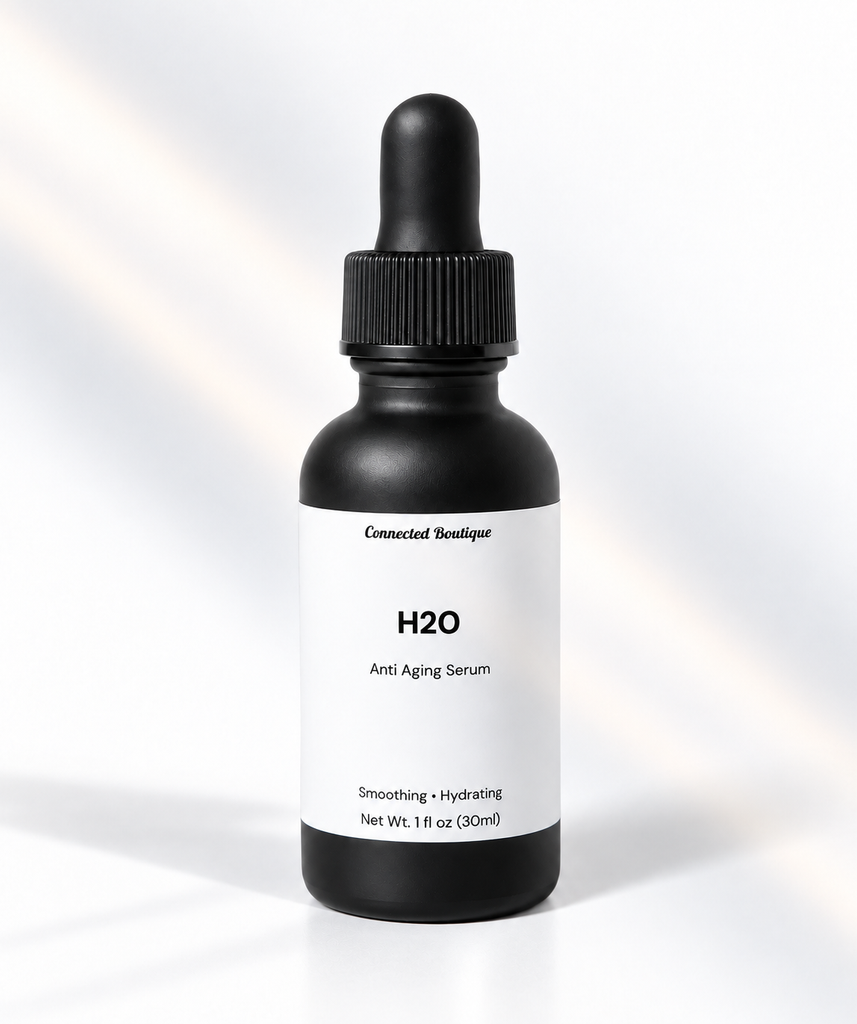
Our H2O Hyaluronic Serum is part of our skincare collection, offering a way to incorporate hyaluronic acid into your daily beauty ritual.
Whether you’re beginning your skincare journey or refining an established routine, understanding the role of hydration can help you make more informed choices about the products you use.
Healthy-looking skin doesn’t require an overwhelming routine. It begins with understanding what your skin needs and caring for it consistently.
Frequently Asked Questions
Does oily skin need hydration?
Yes. Oily skin can still become dehydrated. Hydrating products can help replenish water without necessarily adding heavy oils to your routine.
Can hyaluronic acid be used every day?
Hyaluronic acid is generally suitable for daily use when included in a well-formulated skincare product. Always follow the product directions and consider your skin’s individual sensitivity.
Should I apply hyaluronic acid before or after moisturizer?
Hyaluronic acid serums are typically applied after cleansing and before moisturizer. Following with moisturizer helps support the skin’s moisture balance.
Is hyaluronic acid suitable for sensitive skin?
Hyaluronic acid is often well tolerated, but overall product formulation matters. If your skin is reactive, patch-testing new products is a sensible precaution.
What’s the difference between a hydrating serum and a moisturizer?
Hydrating serums typically focus on attracting and retaining water, while moisturizers help soften the skin and reduce moisture loss. They can work together as part of a balanced skincare routine.
Related post

06
Jun