
What Is Duochrome Eyeshadow? How Color-Shifting Eyeshadow Works
If you’ve ever looked at an eyeshadow and thought, Wait… was that purple a second ago?, you’ve probably seen a duochrome eyeshadow.
Duochrome eyeshadow is designed to reflect more than one color depending on the light, angle, and movement. Instead of looking like one flat shade, a duochrome can shift between two different tones — think green to gold, pink to purple, blue to violet, or bronze to green.
That color shift is what makes duochrome makeup look completely different from traditional shimmer eyeshadow.
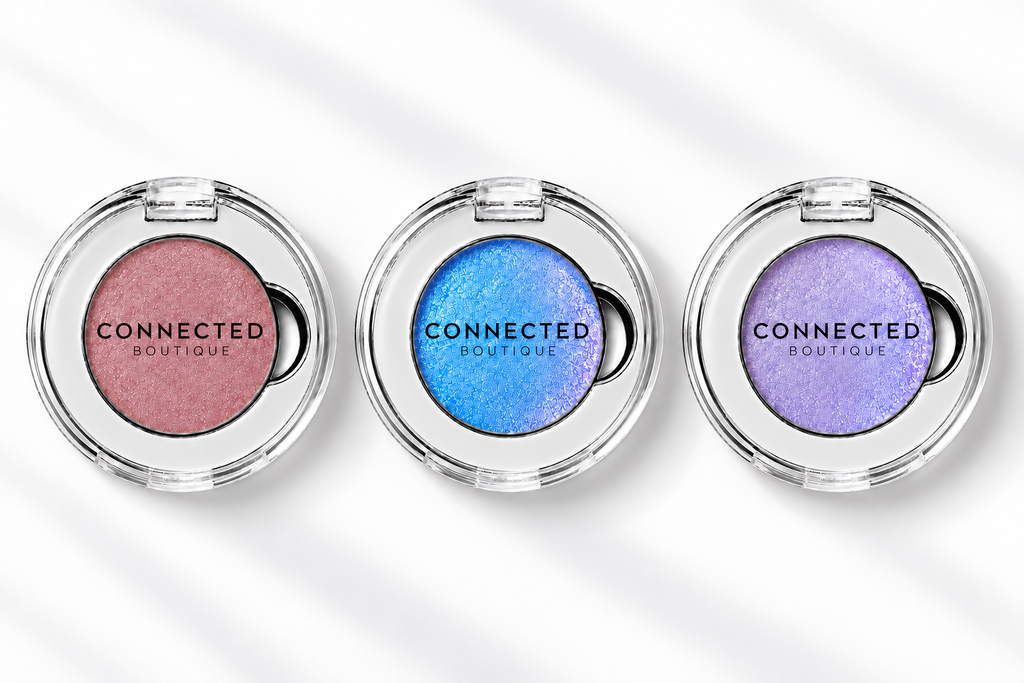
At Connected Boutique, our Shifted Frequencies collection was created around exactly that effect: multidimensional color that changes as you move.

What does duochrome mean in makeup?
In makeup, duochrome generally describes a pigment or eyeshadow that appears to shift between two colors.
The base color may look one way when you’re facing forward, while the reflective pigments show another color when the light hits from a different angle.
That means the same eyeshadow can look completely different:
-
indoors versus outside
-
under warm versus cool lighting
-
in direct sunlight
-
when photographed or filmed
-
depending on the color underneath it
That changing effect is why duochrome eyeshadow is especially popular for bold eye looks, festival makeup, editorial beauty, and anyone who loves makeup that feels a little unexpected.
Duochrome vs. multichrome eyeshadow
Duochrome and multichrome eyeshadow are related, but they aren’t exactly the same.
A duochrome typically shifts between two main colors.
A multichrome can reflect several colors as the light or viewing angle changes.
Both create a dimensional effect that traditional shimmer or metallic eyeshadow usually can’t replicate.
For everyday wear, duochromes can actually be surprisingly easy to use because one shade can create the appearance of a more complicated eye look without requiring several different eyeshadows.
Why does duochrome eyeshadow look different in every light?
The magic is in how the reflective pigments interact with light.
Unlike a flat matte pigment, color-shifting pigments reflect different wavelengths of light depending on the angle from which they’re viewed. That’s why a shade might look green when you look straight at it but flash gold when you turn your head.
It also explains why duochrome eyeshadow can be difficult to capture in a single photo. A still image may only show one part of the shift, while movement or video lets you see the full effect.
Natural light is one of the best ways to see the shift clearly.
How do you apply duochrome eyeshadow?
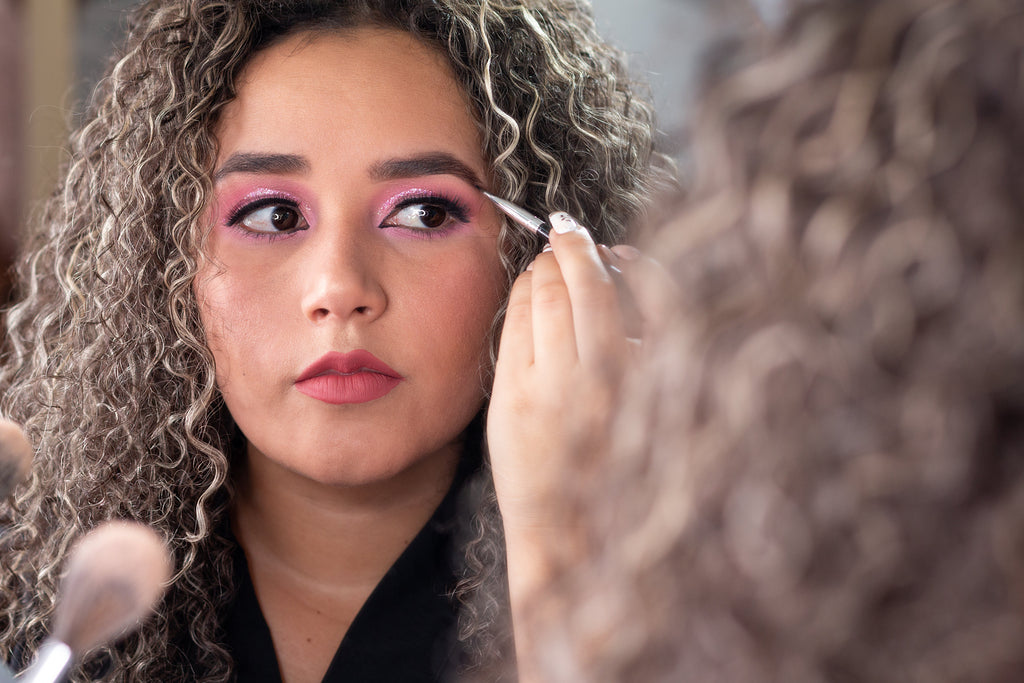
Duochrome eyeshadow can be applied with your finger or an eyeshadow brush, depending on the finish you want.
For the strongest reflective effect, pressing the shadow onto the eyelid often works better than aggressively sweeping it back and forth.
Try:
-
using your fingertip for a concentrated metallic finish
-
using a flat or dense eyeshadow brush for more control
-
pressing rather than heavily blending
-
layering the color to increase intensity
-
using an eyeshadow primer if you prefer extra grip or longevity
A primer is optional, but like most eyeshadows, it can help enhance wear depending on your skin type and makeup routine.
Can you wear duochrome eyeshadow by itself?
Absolutely.
One of the easiest ways to wear duochrome eyeshadow is as a one-shadow eye look.
Apply the shade across the lid, softly blend the edges, and let the shifting pigment do the work. Because the color changes as you move, a single duochrome shade can create the illusion of several colors on the eye.
You can also use duochrome eyeshadow:
-
on the center of the eyelid
-
over a matte base
-
in the inner corner
-
as a lower-lash-line accent
-
layered over black or another dark shade for extra depth
-
as part of a full multichrome or editorial eye look
Is duochrome eyeshadow good for everyday makeup?
It can be.
Duochrome doesn’t automatically mean dramatic. Some shades have softer shifts that work beautifully with neutral makeup, while others are much more intense.
The key is choosing the shift and application style that fits the look you want.
A light wash can give the eye subtle dimension. A more concentrated application creates the bold, high-shine effect duochromes are known for.
How do you choose a duochrome shade?
Start with the colors you already enjoy wearing.
If you love warmer makeup, try shifts involving gold, bronze, rose, or copper tones.
If you prefer cooler makeup, look for violet, blue, green, silver, or lavender shifts.
And if you want maximum contrast, choose a shade where the base and shift are noticeably different.
The fun part is that there really isn’t one “correct” way to wear them.
Meet Shifted Frequencies
Connected Boutique’s Shifted Frequencies™ collection features color-shifting pressed eyeshadows created for multidimensional looks that change with the light.
Shades range across green, gold, purple, pink, blue, violet and other shifting finishes, giving you options from wearable dimension to full statement makeup.
Whether you wear one shade across the lid or layer it into a more detailed look, Shifted Frequencies was designed to make the shift the focus.
Explore the Shifted Frequencies collection and find the shade that matches your frequency.
FAQ: Duochrome Eyeshadow
What is duochrome eyeshadow?
Duochrome eyeshadow is an eyeshadow containing reflective pigments that appear to shift between two colors depending on lighting and viewing angle.
What is the difference between duochrome and multichrome eyeshadow?
Duochrome generally refers to a two-color shift, while multichrome pigments may reflect several different colors.
Do you need primer for duochrome eyeshadow?
Not necessarily. Duochrome eyeshadow can be worn without primer, although primer may improve grip, intensity, or wear depending on the formula and your preferences.
Should you apply duochrome eyeshadow with your finger or a brush?
Either works. Fingertip application often creates a more concentrated reflective finish, while a brush offers more control.
Can beginners wear duochrome eyeshadow?
Yes. A one-shadow duochrome look is actually one of the easiest ways to create an eye look that appears more complex than it is.
Related post

06
Jun